Bounce It Back: How Mirrors Rescue a Living Wall Stuck in a Dark Corner
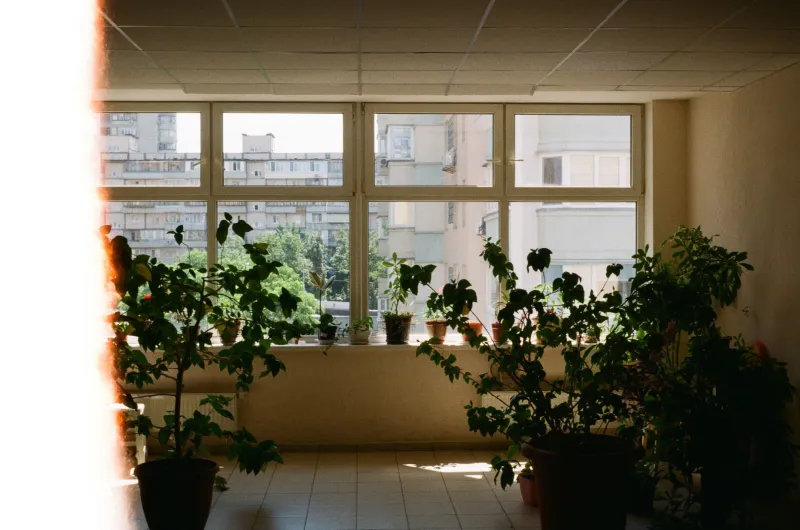
Every Albany home has that one room. You know the one — north-facing, windows that seem more decorative than functional, and by 2 PM in January it's basically dusk in there. It's also, inevitably, the room where clients want their living wall.
We get it. A wall of greenery is exactly what a dim room needs. The catch is that plants are solar-powered, and a north wall gives you maybe a quarter of the light a south-facing room gets. The good news? You don't have to give up. You just have to get sneaky with reflection.
Why Reflected Light Is a Legitimate Strategy
Plants don't care where photons come from. Direct sun, light bounced off a mirror, light ricocheting off a glossy white ceiling — photosynthesis doesn't discriminate. A well-placed mirror won't turn a cave into a greenhouse, but it can meaningfully raise the light levels in the two to four feet of wall directly opposite it.
We tested this in our own studio on Lark Street, which has one stubborn north-facing wall. A 3-by-4-foot mirror angled toward the window pushed measurable light on the opposite wall from "barely readable" to "comfortably plant-safe" for low-light species. Not dramatic. Not magic. But real.
Placement Rules That Actually Matter
Before you start hanging mirrors, a few ground rules from dozens of installs:
Angle toward the window, not the room. A mirror should catch light and throw it at your plants. That usually means positioning it on the wall adjacent to the window, angled roughly 15 to 30 degrees toward the glass. A mirror directly across from a window mostly just shows you a window.
Go big or go bored. A small round mirror bounces a small round patch of light. If reflection is doing the work, a larger mirror — think at least the width of your plant display — spreads that light across more foliage.
Mind the midday glare. In summer, a mirror angled just right can throw a hot spot onto leaves. If you see scorched patches on your pothos by August, nudge the angle or swap to a frosted finish.
Watch what the mirror reflects. You want it reflecting a window or a light-colored wall — not the TV, not the hallway, not your dining table. Reflections of clutter double the clutter.
A Before-and-After From a Pine Hills Install
A client in Pine Hills had a narrow den with one north window and a blank wall she wanted covered in greenery. The first attempt — a shade-loving mix of pothos and heartleaf philodendron — survived but sulked, growing sparse and leggy near the far end.
The fix cost under $200: a full-height mirror on the perpendicular wall, angled toward the window, plus a brushed-brass picture light running on a timer above the wall. Same plants, same care routine. Three months later, the growth was noticeably denser, and the mirror made the whole room feel twice as wide. The plants got the light; the client got a bonus design upgrade.
Metallic Accents Pull Their Weight Too
Mirrors are the heavy lifters, but reflective surfaces throughout the room add up:
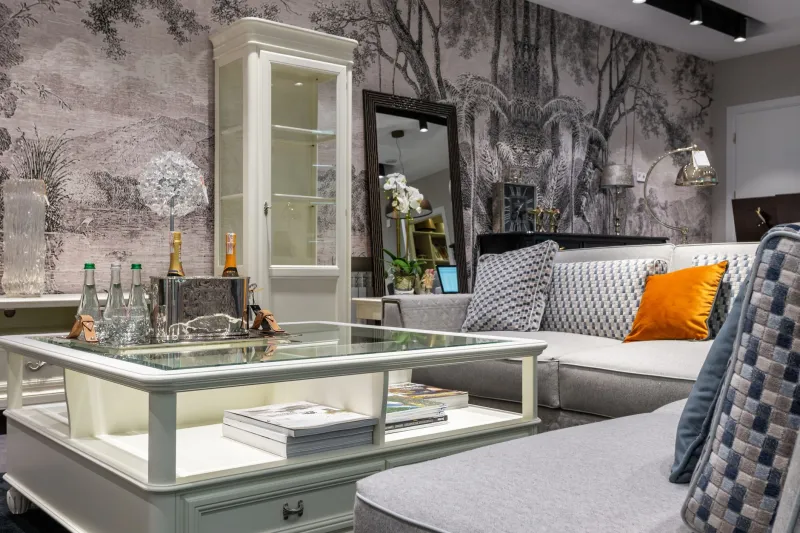
- Brass and gold-toned fixtures throw warm, diffuse light around — great for rooms that already have decent ambient light.
- Glossy white or light-gray paint on the wall opposite your green wall reflects meaningfully more light than matte colors. An eggshell finish is the sweet spot between bounce and washability.
- Glass and acrylic furniture keeps light moving through a room instead of stopping at a bulky wooden console.
- Metallic planters — careful here. They can heat up and cook roots near a sunny window. Save them for the dim zones.
Plants That Make the Most of Every Bounce
Reflected light is still modest light, so build your wall with species that tolerate low conditions but respond well when things improve:
Pothos (Epipremnum aureum) — the workhorse. Survives on scraps of light, grows visibly faster when you add reflection. Marble Queen varieties brighten a dim wall on their own.
Heartleaf philodendron — nearly indestructible, trails beautifully, and fills in fast once light improves.
ZZ plant — slow but bulletproof. It won't explode with growth, but it won't punish you for a dark corner either.
Bird's nest fern — loves the consistent humidity a living wall provides and handles indirect light gracefully.
Chinese evergreen (Aglaonema) — arguably the best foliage color-per-lumen ratio available. Silver and pink varieties practically glow against a dark wall.
Skip anything labeled "bright indirect light" — fiddle leaf figs, most succulents, crotons. Reflected light won't cut it, and no mirror will save them.
One Honest Caveat
Reflection is a supplement, not a substitute. In Albany's darkest stretch — roughly mid-November through early February — even a well-mirrored north room may need a supplemental grow light for a few hours a day. We usually recommend a slim LED bar hidden above the wall's crown, which pairs nicely with that metallic accent strategy anyway.
The bottom line: if your dream wall is pinned to a dim room, don't move the dream. Move the light. A mirror, a can of eggshell paint, and the right plant list will get you closer than you'd think.