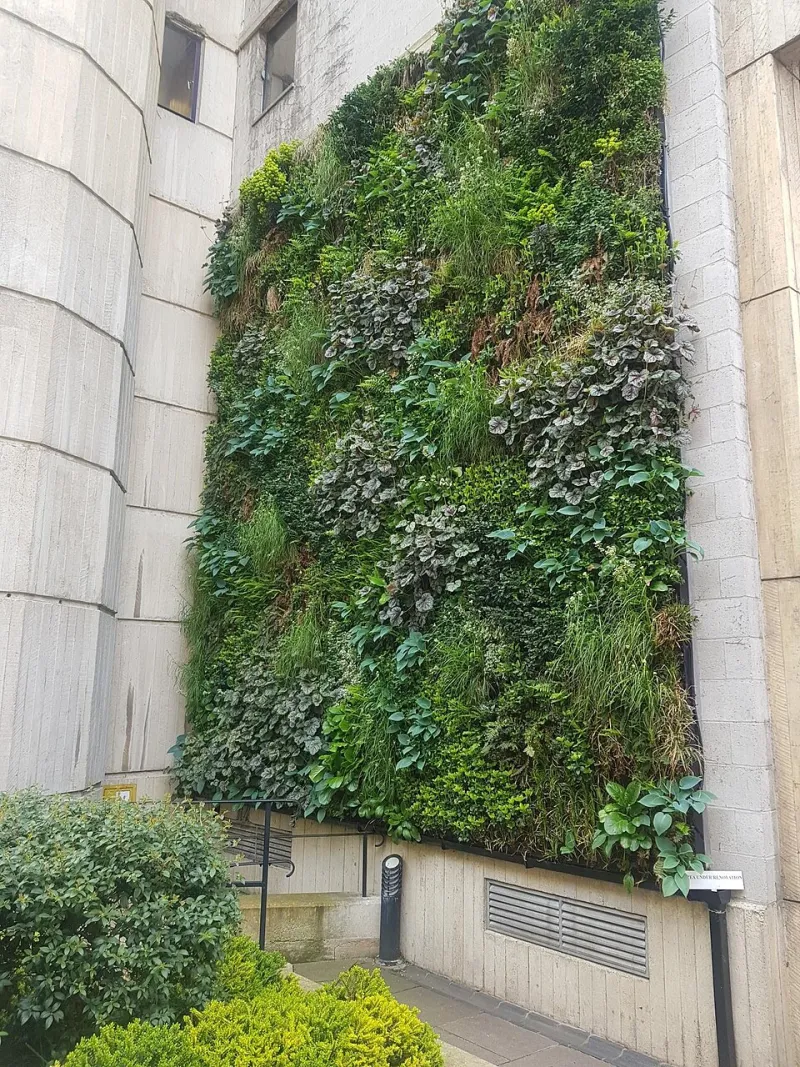
Steam, Tile, and Trailing Pothos: The Case for a Bathroom Living Wall
Photo: Olivier Bruchez, CC BY-SA 2.0, via Wikimedia Commons
Ask around and you'll hear the same story: someone invests in a gorgeous living wall for the living room, then spends the winter watching it sulk under dry baseboard heat while the bathroom pothos — ignored for months — throws out six inches of new vine.
That's not a coincidence. It's a clue.
Here at Living Walls Albany, we've installed greenery in just about every room configuration you can imagine, and we've come to believe the bathroom is the most underrated canvas in the house. The steam does half your work for you.
The Humidity Advantage You're Already Paying For
Every shower you take turns your bathroom into a temporary terrarium. Humidity spikes, temperatures rise, and the air stays soft and moist long after you've towelled off. For tropical foliage — the stuff that hails from rainforest understories — this is basically a spa day, every day.
Compare that to a living room in January, when the furnace runs constantly and indoor humidity can drop below 25 percent. Most houseplants spend the Albany winter in survival mode. Your bathroom plants barely notice it's February.
There's also a practical bonus: bathrooms are small. A modest 4-by-6-foot wall can visually transform the entire room, delivering maximum impact per square foot of installation. You get the jungle effect without the jungle budget.
Pick Plants That Want to Be Sprayed
Not every houseplant appreciates a steam room. Skip the succulents, cacti, and anything fuzzy-leaved — they'll rot or resent the constant moisture. Instead, build your wall around species that evolved for rainforest humidity:
- Pothos (Epipremnum aureum) — the undisputed champion. Tolerates low light, shrugs off temperature swings, and trails beautifully from wall pockets.
- Heartleaf philodendron — nearly as forgiving as pothos, with a slightly more refined leaf.
- Boston fern — a classic bathroom plant for a reason. It will drink up that shower steam all winter.
- Peace lily — handles low light and even flowers in these conditions.
- Pilea peperomioides and nerve plant (fittonia) — great for filling small pockets with texture and color.
- Orchids and air plants — mounted accents that absolutely thrive on bathroom moisture.
One caveat: humidity helps, but it doesn't replace light. If your bathroom window faces an alley, choose low-light champions like pothos and peace lily, or supplement with a slim LED grow strip disguised as a vanity light.
Waterproofing: The Non-Negotiable Part
This is where we put on the boring-but-important hat. A living wall adds moisture to a room that's already full of it, so the wall behind the wall matters enormously.
Before anything gets mounted, we check for:
- A vapor barrier or waterproof backing panel between the planting system and the drywall. Standard practice in any wet-adjacent install.
- Sealed seams and edges, especially near the shower line where splash is constant.
- A drainage or catch plan. Even in a humid room, you'll water occasionally, and that water has to go somewhere besides your subfloor.
- Adequate clearance from electrical. GFCI outlets are standard in bathrooms for a reason — keep irrigation lines and lighting fixtures compliant and dry.
Done right, the living wall actually protects the room: the planting panels shield the wall surface from direct splash, and the foliage softens all that hard tile acoustically and visually.
Ventilation: Steam Is Fuel, Stagnation Is a Problem
Here's the balance people miss. Plants love humidity; they hate stale, soupy air. A bathroom with no fan and a perpetually fogged mirror will grow mold faster than foliage.
The fix is simple: run the exhaust fan during and for 20 minutes after showers, or crack the window when weather allows. You want air that's moist but moving. Your plants get their drink, the room gets its reset, and nobody's grout pays the price.
If your fan is weak or nonexistent, that's a fix worth making before the install — for the plants and for the house.
From Half-Bath to Home Spa: Styling Ideas by Size
The tiny half-bath. No window? No problem — go artificial-light-friendly and dramatic. A single wall of trailing pothos above the toilet, lit by a warm grow bulb, turns the smallest room in the house into the one guests remember.
The family full bath. Mix pockets of ferns and fittonia near the shower wall, where they'll catch the most steam, and keep peace lilies on the window side. Hardworking and handsome.
The master suite. This is where you go spa-mode: a full green feature wall opposite the tub, maybe a teak bench, eucalyptus hanging from the showerhead, and layered lighting that makes the foliage glow during an evening soak. It's the closest thing to a resort bathroom you can build without a renovation loan.
The Before-and-After Reality
The transformation is genuinely startling. Beige tile, builder-grade mirror, fluorescent flatness — then a wall of layered green, and suddenly the room reads intentional, calm, almost expensive. Real estate agents we work with have started flagging styled bathrooms in listing photos because buyers linger on them.
But the bigger change is daily. Brushing your teeth under a cascade of philodendron leaves is a small, repeatable dose of the outdoors — especially valuable during those gray Albany weeks when the garden is under snow and the sky is the color of wet concrete.
Your steamiest room has been training for this its whole life. Give it the wall it deserves.