Seven Plants That Won't Quit: Building a Living Wall That Survives Albany Weather
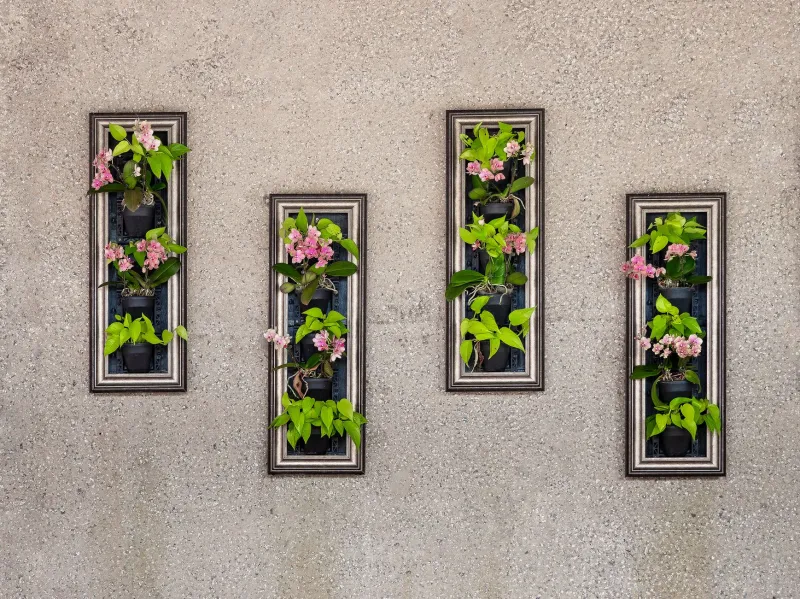
Living walls get a bad rap for being high-maintenance. And sure, if you fill a vertical panel with fussy tropicals and hang it in a dark hallway, you're going to have a sad-looking wall by February. But here's the thing we tell every Albany homeowner who walks into our studio: the secret isn't constant care — it's picking the right plants in the first place.
The Capital Region throws everything at your greenery. Winters that dip well below zero, humid summers, and that tricky shoulder season when the heat clicks off but the sun hasn't quite committed yet. The seven plants below have proven themselves on real walls in real Albany homes, from Center Square brownstones to newer builds in Bethlehem.
1. Pothos — The Forgiving Workhorse
If we had a dollar for every pothos we've installed, we'd have bought a building on Lark Street by now. This trailing vine tolerates low light, irregular watering, and temperature swings that would kill pickier plants. Its cascading growth habit softens the hard lines of a vertical panel beautifully.
Best spot: Entryways and dim corners of living rooms. Care tip: Water when the top inch of soil dries out — roughly every 10 days in winter, weekly in summer.
2. Snake Plant (Sansevieria) — The Upright Statement
Snake plants bring architectural structure to a wall, with sword-like leaves in variegated greens and yellows. They practically thrive on neglect and handle the dry air that comes with forced-hot-air heating.
Best spot: Living rooms and bedrooms — they're among the best air-scrubbers around. Care tip: Underwater rather than overwater. Every three weeks is plenty during Albany's heating season.
3. Hart's Tongue Fern — The Native Overachiever
Most ferns divas out at the first sign of dry air, but Hart's tongue fern is different. It's actually native to parts of the Northeast, handles shade like a champ, and its glossy, strap-like fronds add texture that feathery ferns can't.
Best spot: North-facing living rooms or shaded entryways. Care tip: Keep soil evenly moist but never soggy. A pebble tray helps in dry winters.
4. Philodendron Brasil — The Color Pop
With heart-shaped leaves streaked in lime and cream, this vining philodendron brings brightness to a wall without demanding attention. It grows fast, fills gaps quickly, and roots easily if a section needs replacing.
Best spot: Sunrooms with filtered light, or anywhere with a bright window nearby. Care tip: Rotate the panel occasionally so growth stays even. Water weekly in the growing season.
5. Hens and Chicks (Sempervivum) — The Cold-Weather Champion
Here's one for the sunroom crowd. Sempervivum is genuinely cold-hardy — we're talking zone 3 hardy — which makes it the rare succulent that doesn't flinch at an Albany January. The rosettes multiply over time, slowly filling in the panel on their own.
Best spot: Sunrooms and south-facing walls with direct light. Care tip: Water sparingly — every two to three weeks — and make sure the panel drains well.
6. English Ivy — The Classic Drape
Old faithful. Ivy has been dressing up walls for centuries, and for good reason: it's dense, shade-tolerant, and grows in that lush, curtain-like way that makes a living wall look established fast.
Best spot: Entryways, where its trailing habit frames a door beautifully. Care tip: Give it a misting during dry winter months and trim it back each spring to keep it tidy.
7. ZZ Plant — The Bulletproof Finisher
ZZ plants might be the most indestructible houseplants on earth. Waxy, deep-green leaves; tolerance for near-darkness; and the ability to go weeks without water. On a living wall, they anchor the design with glossy, upright foliage.
Best spot: Interior walls far from windows — hallways, powder rooms, dim living room corners. Care tip: Water every two to three weeks. That's it. That's the tip.
A Few Universal Rules
Whatever mix you choose, a couple of habits go a long way. Group plants with similar light and water needs on the same panel — don't pair a thirsty fern with a desert succulent. Check the irrigation system monthly rather than waiting for a plant to look sad. And come October, pull panels back from drafty doors and windows before the first hard frost sneaks up on the Capital Region.
Get the plant selection right from day one, and a living wall stops being a chore and starts being what it should be: the best-looking thing in the room, no matter what the weather's doing outside.