November Through March: A Month-by-Month Survival Guide for Your Indoor Green Wall
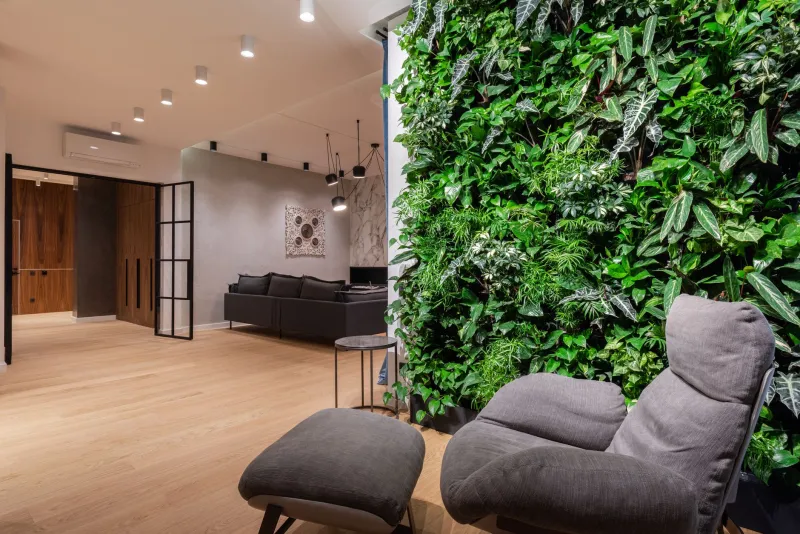
Every Albany gardener knows the rhythm: the last leaves drop in late October, the first hard frost shows up sometime around Halloween, and then it's a long, gray slog until April. Your living wall feels it too. Indoor plants don't experience snow, but they absolutely experience the consequences — furnace-dried air hovering at 20% humidity, daylight shrinking to nine hours, and drafts sneaking through century-old window frames.
The good news? A living wall that sails through a Capital Region winter comes out the other side lush, established, and ready to be the star of your spring staging. Here's the calendar we actually follow.
Before the First Frost: Make Your Swaps
Sometime in early-to-mid November, before the heat kicks on for good, audit your wall. Anything that's been limping since September — a struggling fern, a leggy fittonia — won't survive the indoor transition. Replace cold-sensitive or high-humidity plants with winter workhorses: pothos, ZZ plant, snake plant, heartleaf philodendron. These tolerate dry air and low light without sulking.
This is also the moment to check your wall's mounting and drainage. A drip line that leaks a little in July becomes a real problem in January when water sits and freezes near a drafty sill.
November: Transition Mode
- Cut watering frequency by roughly a third. Growth slows as light fades, and wet soil in dim conditions invites root rot.
- Rotate plants a quarter turn so they don't stretch one-sided toward windows.
- Move anything near radiators or heating vents. Hot, dry air blasts are the number-one winter killer.
December: Light Is the Enemy
By the solstice, Albany gets under nine hours of daylight, and most of it is the color of dishwater. Even south-facing windows won't cut it for a dense wall where upper plants shade lower ones.
- Add a grow light. A full-spectrum LED strip mounted above or in front of the wall, running 10–12 hours daily, costs pennies to operate and makes the difference between survival and thriving.
- Put it on a timer. Consistency matters more than intensity. Plants want a rhythm, not a light show.
- Water even less than you think you should. When in doubt, check soil moisture with your finger before reaching for the watering can.
January: The Humidity Battle
This is the cruelest month for indoor greenery. Forced-air heat and wood stoves push indoor humidity down to desert levels, and plant tips will brown accordingly.
- Run a humidifier nearby. A small console unit in the same room, targeting 40–50% humidity, benefits your plants, your skin, and your hardwood floors all at once.
- Try pebble trays under lower wall pockets if a humidifier isn't practical.
- Group, don't spread. Plants clustered together create their own microclimate. Your wall already does this — keep the room's other plants nearby.
- Dust leaves monthly. Short days mean every photon counts, and dusty foliage blocks light absorption.
February: The Doldrums
Nothing much happens in February, and that's fine. Your jobs:
- Hold the line on light and humidity.
- Inspect weekly for spider mites and scale, which explode in dry indoor air. A damp cloth wipe-down usually handles early infestations.
- Resist fertilizing. Feeding a dormant plant is like offering seconds to someone who's asleep.
March: The Turn
Daylight stretches back past twelve hours by month's end, and your wall notices before you do.
- Resume light feeding in late March — a half-strength liquid fertilizer every three weeks.
- Begin increasing water as growth resumes.
- Prune leggy winter growth. This feels brutal but triggers bushier spring regrowth.
- Start planning any spring additions. Nurseries around Albany restock hardy options by April, and you'll want first pick.
The Payoff Comes in Spring
Here's the staging secret: a living wall that's been tended all winter is a showpiece by the time the tulips bloom in Washington Park. Buyers touring an Albany home in April see vibrant greenery that most staged homes can't fake — and they can tell the difference between a thriving wall and a last-minute prop from a big-box store.
Winter care isn't glamorous, but it's a couple of hours a month, most of it spent simply paying attention. Keep the calendar handy, keep the humidifier humming, and your wall will carry you through to spring in style.