The Spare Room Has Been Ignored Long Enough: A Weekend Plan for a Plant-Filled Guest Retreat

Photo: Dennis G. Jarvis, CC BY-SA 2.0, via Wikimedia Commons
Every house has one. The room you apologize for when guests visit. In Albany, where older colonials and capes often come with a small back bedroom that never quite earned a purpose, that room usually becomes a landfill of seasonal decorations, exercise equipment, and luggage.
Here's the thing we tell every client at Living Walls Albany: a spare bedroom that sits empty 340 days a year is square footage you're already paying for. Heating it, insuring it, cleaning around it. Converting it into a plant-lined guest retreat is one of the highest-return, lowest-cost makeovers a homeowner can take on — and it's almost entirely a DIY project.
Why the Guest Room Is Secretly Perfect for Greenery
It sounds backward, but the qualities that make a spare room a bad bedroom for everyday life make it a great home for plants. It's quiet. It gets steady, indirect light in most Albany homes because it's often on the north or east side. Nobody's slamming the door or blasting the heat, which means temperature and humidity stay more stable than in your living room.
Low-light champions like pothos, heartleaf philodendron, snake plants, and cast iron plants (the name is not a joke — they earn it) will happily fill a wall or shelf in a room that gets a few hours of gentle morning sun. Skip the fussy stuff. A rarely-used room is not the place for a fiddle-leaf fig's drama.
The Watering Problem, Solved
The biggest objection we hear: "I'll forget to water a room I never go into." Fair. Three fixes:
- Self-watering planters with visible reservoirs. Fill them every three weeks and stop thinking about it.
- A watering calendar on the door. Old-fashioned, but if you're already walking past the room to take out the trash, a dry-erase board works.
- Choose drought-tolerant species. Snake plants and ZZ plants can shrug off a missed watering without holding a grudge.
If you install a small living wall panel in the room, pick a modular system with a shared reservoir so you're watering one spot, not fifteen pots.
The Weekend-by-Weekend Timeline
Weekend 1 — Empty and assess. Clear the room completely (this is the hard part — budget a dump run or a donation pickup). Check the radiator or baseboard heat, look for drafts around the windows, and map your light with a phone app or just honest observation across a day.
Weekend 2 — Paint and prep. A warm white or soft sage on the walls makes greenery pop and brightens a low-light room. Patch the walls now, before you mount anything. If you're renting out the room occasionally on a short-term rental platform, this is also the moment to check smoke detectors and egress.
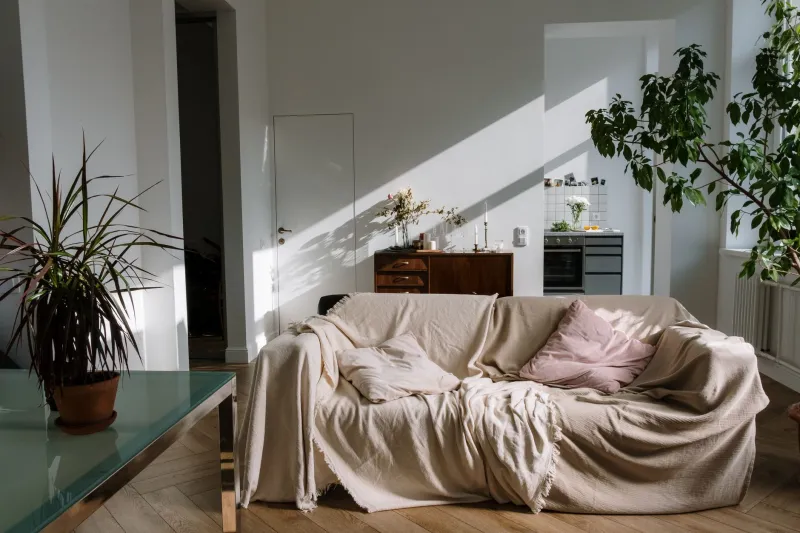
Weekend 3 — Build the green layer. Mount two or three floating shelves on your brightest wall, or install a modular wall panel. Plant with your low-light roster: pothos trailing down the shelves, a snake plant in the corner, a philodendron climbing a simple moss pole. Add one large floor plant — a parlor palm or dracaena — for scale.
Weekend 4 — Make it a guest room again. Now the fun part: a proper bed (a quality daybed works if the room is small), blackout curtain, a reading lamp, fresh linens. The plants do the decorating; you just need the mattress to be comfortable.
The Payoff
When relatives visit for the holidays or friends crash after a night out on Lark Street, they get a genuinely restful room — quieter, greener, and calmer than a hotel. And when the room is empty again, you've got the most pleasant plant corner in the house instead of a monument to procrastination.
One room, four weekends, a modest budget. That's not a renovation. That's a rescue.